
In AI, the gap between the university curriculum and what employers actually need isn't measured in years — it's measured in generations of tools. An applied AI lab at a university closes that gap: students learn on real industry data, and companies get graduates who are ready to work from day one.
The problem: the course exists, the skill doesn't
A classic machine learning course ends with textbook datasets: Iris, MNIST, Titanic. Students get a grade, but not experience: they've never seen messy production data, never agreed on a metric with the business, and never deployed a model that real people use. Employers notice it in the very first interview.
The lab model: three stages
1. A credit-bearing elective course
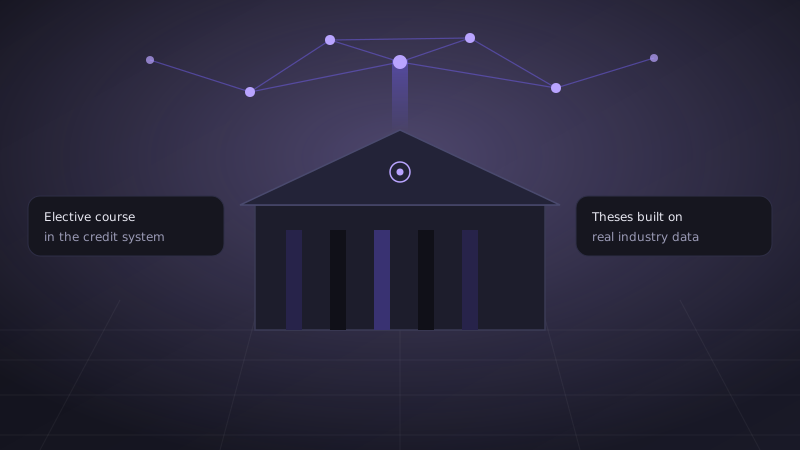
The entry point to the lab is a one-semester elective course built into the university's credit system. It's taught by practitioner trainers from industry: ML engineers, data analysts, heads of AI teams. By the second week, students are already working not with textbook examples but with anonymized data from partner companies.
2. Projects on real industry data
Project tracks are the core of the lab. A partner company brings a problem (demand forecasting, churn analysis, computer vision on the production floor), and a student team solves it under a practitioner's mentorship. The university credits this as an industrial and pre-graduation internship — a formality turns into real experience.
3. Graduation projects supervised by industry practitioners
The best project work grows into graduation theses. The supervisor is a practitioner from the partner company, and the result isn't a thesis that gathers dust on a shelf — it's a deployed solution the graduate can list on their resume as a real case.
What the university gets
Practitioner trainers without the cost of permanent staff, a program within the credit system, graduation project supervisors, internship credit and — most importantly — graduates whom employers snap up before they even defend their theses. For admissions, a working AI lab is a powerful selling point.
What industry gets
Partner companies get a pipeline of proven candidates, applied problems solved by the lab, and a testing ground for pilots where mistakes are cheap. That's cheaper and more reliable than hiring “blind” off the open market.
Where a university should start
Three components are enough: a classroom with access to computing resources (the cloud covers all of it), one single-semester elective course, and two or three industry partners with real problems. AI Research Labs helps put all three in place and launches the lab within one semester — from methodology and curriculum to trainers and a partner network.
Want to launch an applied AI lab at your university?
Discuss the launch ↗